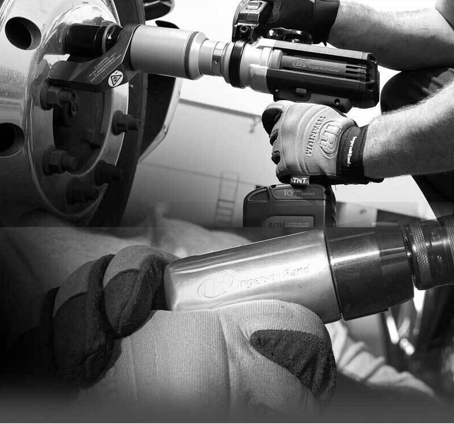
High-throughput assembly often pushes teams toward impact wrenches to reduce cycle time and operator fatigue. The trade-off is torque uncertainty. Impulse tools can seat fasteners quickly, but the relationship between “tool setting” and clamp load is not linear, and it shifts with joint stiffness, lubrication, rundown length, air pressure or battery condition, socket condition, and operator technique.
That variability is why consistent torque audits matter. Audits provide evidence that the process remains within a defined window and that drift is detected early—before escapes, rework, or field failures. Poor torque verification shows up as loosening in service, damaged threads, cracked castings, distorted components, and inconsistent residual torque readings that are hard to diagnose after the fact. Engineers and quality teams must decide where impact tools are acceptable, how to verify them, and when a controlled fastening strategy (or a different tool type) is required.
Impact wrench behavior in real joints
Impact wrenches apply torque in pulses. The tool’s hammer/anvil mechanism stores energy and releases it intermittently, which is effective for breaking friction and seating fasteners quickly. For assembly, the challenge is that the achieved clamp load depends heavily on friction conditions and the joint’s torque-angle signature.
Key contributors to variation include:
- Joint stiffness and rundown: Soft joints (gaskets, plastics, stacked tolerances) absorb energy; hard joints reach torque abruptly and are easier to overshoot.
- Friction spread: Changes in coating, lubrication, debris, or reuse can swing clamp load widely at the same tool setting.
- Tool health and consumables: Worn anvils, loose sockets, and extensions increase scatter; impact-rated sockets reduce losses and damage.
- Supply stability: For pneumatic tools, line pressure and flow matter; for cordless tools, battery state and temperature affect delivered energy.
Impact wrenches are often acceptable for non-critical joints, preliminary run-down, or where a secondary verification step exists. They are a risk for joints with tight clamp-load requirements, low prevailing torque margin, or safety/regulatory characteristics unless the process includes stronger controls.
Corded vs cordless impact wrenches
Cordless impact wrenches have reduced infrastructure burden and help with ergonomics and access. They also introduce new variables that process owners need to control.
Considerations that typically separate the two:
- Energy consistency
- Pneumatic: sensitive to line pressure, regulator settings, hose length, and coupler restrictions.
- Cordless: sensitive to battery charge, battery age/internal resistance, and thermal throttling.
- Data and traceability
- Many cordless platforms offer onboard counting, torque setting management, and connectivity options; verify what is actually recorded (setting vs achieved torque).
- Maintenance model
- Pneumatic: lubrication, vane wear, and air quality.
- Cordless: battery lifecycle management, firmware control, and periodic functional checks.
If the joint is critical and requires documented torque results, neither a standard pneumatic nor a basic cordless impact should be treated as a “measuring tool.” The audit plan must close that gap.
Torque verification and audit methods
Torque testers for impact wrenches
A torque tester (torque analyzer) with an appropriate transducer is the primary tool for auditing impact wrench output. In practice, audits are only meaningful when the setup represents the production joint.
Common approaches:
- Joint simulators: Spring packs or adjustable joint fixtures approximate hard/medium joints. They improve repeatability versus free-spinning tests.
- Production-representative joints: For high-risk applications, verifying on an actual component stack-up (or a validated replica) gives more relevant results.
Points that matter in audit design:
- Peak vs prevailing: Impact tools create transient peaks. Choose a tester mode and transducer response that matches the audit intent and the tool’s impulse profile.
- Run strategy: Define the number of rundowns, discard criteria (first-run effects), and acceptance limits based on capability data, not a single reading.
- Operator influence: Trigger time, push force, reaction management, and alignment change results. Standardize technique and fixturing.
Calibration and traceability requirements should be explicit:
- Calibration interval: Set by risk, usage, and historical drift. Many plants start with 6–12 months and adjust based on results.
- Traceability: Maintain calibration certificates tied to tool IDs, tester IDs, transducer serial numbers, and revision-controlled audit procedures.
- Data capture: Prefer automatic data logging with timestamps, operator ID, tool ID, and configuration to support containment and root-cause work.
Limitations to state clearly: a torque tester reading does not equal clamp load, and a simulator may not represent every production condition. Audits are a control method, not proof of joint integrity by themselves.
Torque screwdrivers in mixed-tool environments
In electronics and light industrial assemblies, impact wrenches often coexist with torque screwdrivers for small fasteners, covers, and terminals. Torque screwdrivers are chosen when torque is low, fastener size is small, and the risk of stripping or component damage is high.
Where they fit in production and audits:
- Setup verification: Confirm a clutch screwdriver trips within tolerance at the setpoint before a run or at shift start.
- Layered process audits: Spot-check tools on a torque tester using the correct adapter and drive interface, documenting readings and tool status.
- Operator technique: Maintain perpendicularity, avoid “riding the clutch,” and control seating to reduce scatter.
Their limitation is similar: they control applied torque more directly than impacts, but they still do not measure clamp load. For critical joints, consider additional methods such as angle monitoring, prevailing torque checks, or destructive validation during process development.
Practical controls for impact tool processes
A workable control plan typically includes:
- Tool selection by joint criticality: Reserve impact wrenches for joints with wider torque windows, higher friction tolerance, or a downstream verification step.
- Defined audit frequency: More frequent checks for high-use tools, high-risk joints, or after maintenance events (anvil replacement, regulator changes, firmware updates).
- Standardized rundown method: Same socket type, same extension policy, defined trigger time, and fixtured reaction where feasible.
- Supply controls: Regulated air with locked settings for pneumatics; battery management rules for cordless (charge thresholds, battery age limits, temperature constraints).
- Documentation discipline: Revision-controlled work instructions, controlled tool settings, and audit records that link to part/line/date.
Why Choose Flexible Assembly Systems?
Flexible Assembly Systems supports impact-wrench and mixed-tool fastening processes with an emphasis on controllability and audit readiness. That includes help selecting tool types appropriate to joint behavior, guidance on torque tester configuration for impulse tools, and practical audit workflows that account for operator influence and joint simulation. Teams also benefit from calibration and traceability knowledge—tool and transducer selection, interval planning based on risk and drift history, and documentation practices aligned with regulated manufacturing environments where records must be complete and defensible.
Conclusion
Impact wrenches—corded or cordless—can be effective in equipment assembly, but they require disciplined verification because their output is sensitive to joint conditions and operating variables. Use torque testers to audit impact tools with representative fixtures and controlled techniques, and use torque screwdrivers where low-torque joints demand tighter handling and reduced damage risk. With clear joint-based tool selection, documented audit methods, and calibration-backed traceability, impact tooling can support production rate without leaving torque quality to chance.